

Getting Started
Neurodiversity Hub Wirral
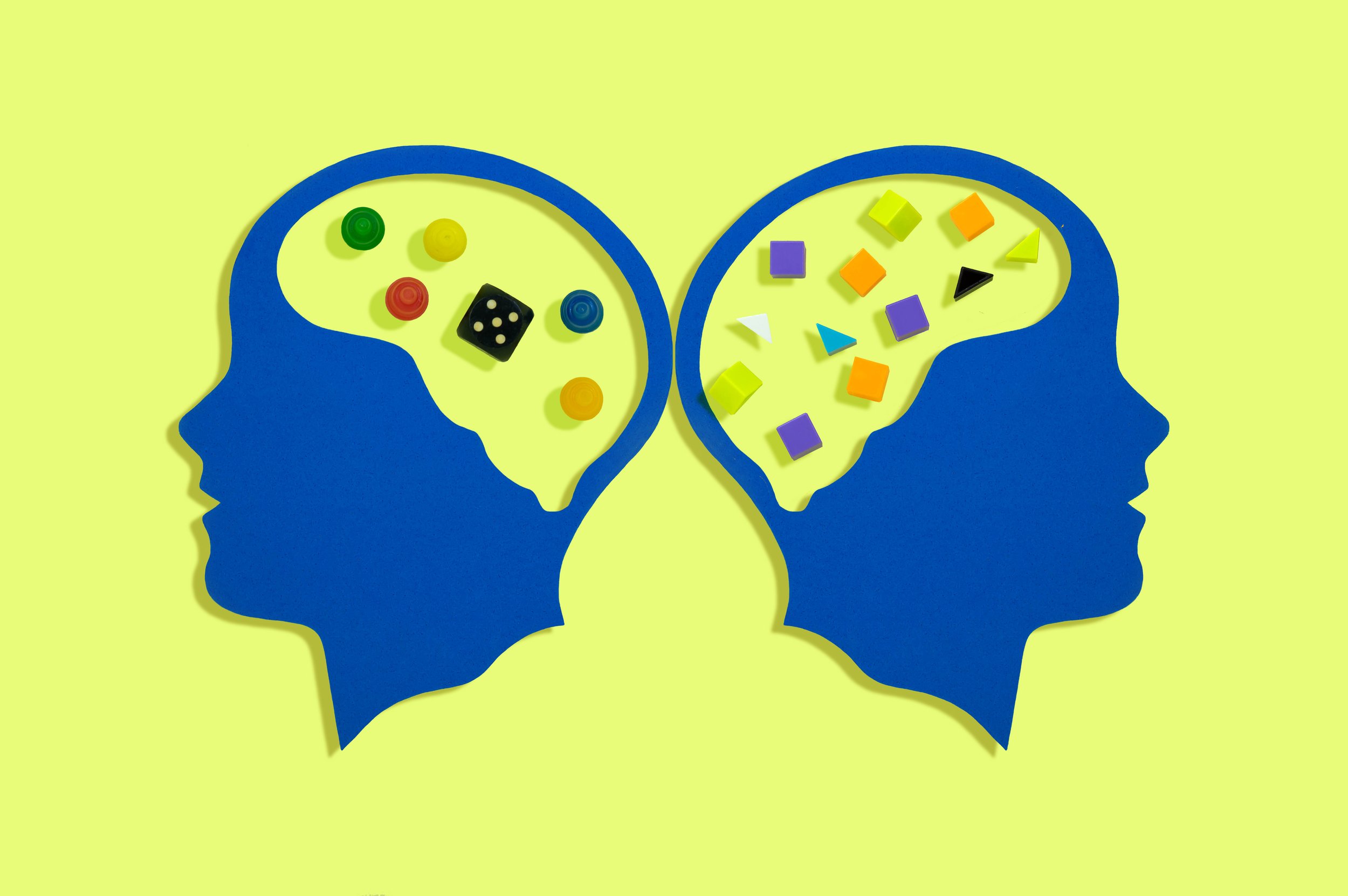
What Skills Make Up Cognitive Ability?
Cognitive ability means using memory, reasoning, and problem-solving skills. It includes many specific abilities:
Language and Verbal Reasoning – Understanding and using words and ideas to make sense of the world.
Visual and Spatial Processing – Knowing where things are in space. For example, seeing what is in front or behind, imagining objects from different angles, or rotating them in your mind.
Memory – Storing and finding information when needed. Think of it like a filing cabinet.
Long-Term Memory – Remembering past events, facts, or how to do things like riding a bike.
Short-Term or Working Memory – Holding information briefly to use right away. For example, repeating a phone number or writing a word you just looked up.
Learning Disability or Intellectual Disability
In the United Kingdom, the term learning disability is used. Internationally, this is known as intellectual disability. Both terms mean the same thing. They describe children, young people, or adults who have significant challenges in two areas:
Thinking and learning skills
Daily living skills, such as self-care, dressing, toileting, social interaction, and using transport
Levels of Learning Disability or Intellectual Disability
There are four categories used to describe the level of learning disability:
Mild – Intelligence Quotient (IQ) of 50–69
Moderate – IQ of 35–49
Severe – IQ of 20–34
Profound – IQ below 20
These categories have limits. They do not measure social or adaptive skills. Also, IQ scores may not be accurate for people with more severe learning disabilities. IQ scores can change over time, so they only give a rough idea of thinking ability.
Learn more from the Challenging Behaviour Foundation:
Formal Definitions of Severe Learning Disability (PDF)
Video: What is a Severe Learning Disability?
Complex Needs
A person has complex needs if they need a high level of support in many parts of daily life. They may rely on health and social care services. This could be due to illness, disability, life circumstances, or a mix of these.
This definition comes from the National Institute for Health and Care Excellence (NICE) guideline: Adults with complex needs: social work interventions including assessment, care management and support final scope.
Cognitive Assessments – What Do They Mean?
A cognitive assessment is a test that helps understand a child or young person’s learning strengths and needs.
Here are some common assessments used:
Wechsler Intelligence Scale for Children – Fifth Edition (WISC–5)
British Ability Scales – Third Edition (BAS-3)
Wechsler Pre-school and Primary Scale of Intelligence – Fourth Edition (WPPSI-4)
Wechsler Individual Achievement Test – Third Edition (WIAT-3)
Behavioural Assessment of Dysexecutive Syndrome – Children’s Version (BADS-C)
Behaviour Rating Inventory of Executive Function – Second Edition (BRIEF-2)
After the assessment, you may receive a report. Here are some terms you might see:
What Is an IQ Score?
An IQ score (intelligence quotient) is a number that shows a child or young person’s overall thinking and learning ability. It combines scores from different tasks and compares them to others of the same age. The average IQ score is 100.
What Is a Percentile Rank?
A percentile rank shows how a child’s score compares to 100 other children of the same age. For example, a percentile rank of 88 means the child scored as well as or better than 88% of their peers.
What Is a Confidence Interval?
Every test score has some error. A confidence interval (CI) shows the range where the true score likely falls. Reports often use a 95% confidence interval to give a more accurate picture.
Adaptive Living Skills
Adaptive living skills help people live independently. These include basic tasks like dressing, eating, and washing, and more complex ones like budgeting, booking appointments, and staying safe.
Children develop these skills at different rates. Learning disabilities, emotional challenges, sensory impairments, or physical disabilities can affect how quickly they learn. Children need chances to learn, practice, and master these skills.
Professionals often assess adaptive living skills. A Clinical Psychologist or Educational Psychologist may use tools like:
Adaptive Behaviour Assessment System, Third Edition (ABAS-3)
Vineland Adaptive Behaviour Scales, Third Edition (Vineland-3)
These tools compare a child’s skills to others of the same age. The assessment usually involves a parent, carer, or key adult from school. It looks at communication, self-care, social interaction, and home skills.
Executive Functioning
Executive functioning helps control actions to reach a goal. Think of it as the “boss” part of the brain, like an air traffic controller guiding planes.
Key executive functioning skills include:
Theory of Mind – Understanding that others have their own thoughts, plans, and feelings.
Decision Making – Choosing what to do based on a situation. For example, deciding what to cook with the ingredients you have.
Attention Control – Choosing what to focus on and when, based on what matters most.
Problem Solving – Using information to find solutions, weighing pros and cons, and making choices.
Planning and Organising – Thinking ahead and making a plan to reach a goal.
Sequencing – Doing tasks in the right order to succeed.
Support in School for Learning Needs
Special Educational Needs and Disabilities (SEND) Support – Graduated Response and Individual Education Plans (IEPs)
If a school sees that a child needs extra help, they may create an Individual Education Plan (IEP) or use the Assess, Plan, Do, Review (APDR) cycle. This is part of the Graduated Response at Special Educational Needs (SEN) Support level.
Parents and carers should be invited to discuss these plans and take part in reviews. If you think your child needs help that the school hasn’t noticed, or if you’re unsure about the support, speak with their teacher or the school’s Special Educational Needs Coordinator (SENCO).
Education, Health and Care (EHC) Plans
If a school cannot meet a child’s needs through its own resources, they may suggest an Education, Health and Care (EHC) needs assessment. This assessment looks at the child’s needs and the support they require to learn and grow.
If approved, the child will receive an EHC Plan. This legal document tells the school what support to provide and may include extra funding.
EHC Plans are based on needs, not just diagnoses or cognitive ability levels.
More information: EHC Needs Assessment –
Attention Deficit Disorder or Attention Deficit Hyperactivity Disorder (ADD or AD(H)D)
Note: This section is still being developed.
As with any disability, each person experiences a unique mix of challenges. Some people may show signs of more than one specific learning difficulty (SpLD).
For more information, visit: The Dyslexia Association – Home