

How Do I Use This is Me?
Neurodiversity Hub Wirral
If you believe a child or young person may show signs of autism, attention deficit hyperactivity disorder (ADHD), developmental coordination disorder (Dyspraxia), or other neurodevelopmental needs, you can ask for the neurodiversity (ND) profiling tool to be completed.
A trained professional will complete the tool with the child or young person, if appropriate, and their family. These professionals often work in settings like nurseries, schools, colleges, or health services. You can speak to a health visitor, teacher, or support staff to request a profile.
The tool is based on research, clinical best practices, and co-production with local young people, families, and professionals. (See the research section for more details.)
How the Pathway Works
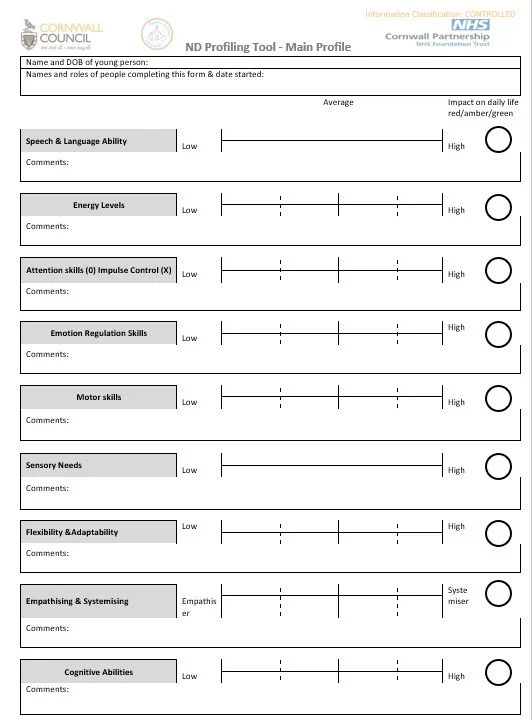
The profile includes nine areas. These help build a personalised overview of the child or young person’s strengths and differences. The tool supports shared understanding and involves everyone who plays a role in the child’s life.
This tool is more flexible than current pathways. It allows you to track changes over time. You’ll also get a clear visual guide showing where the child or young person stands and how things change month by month.
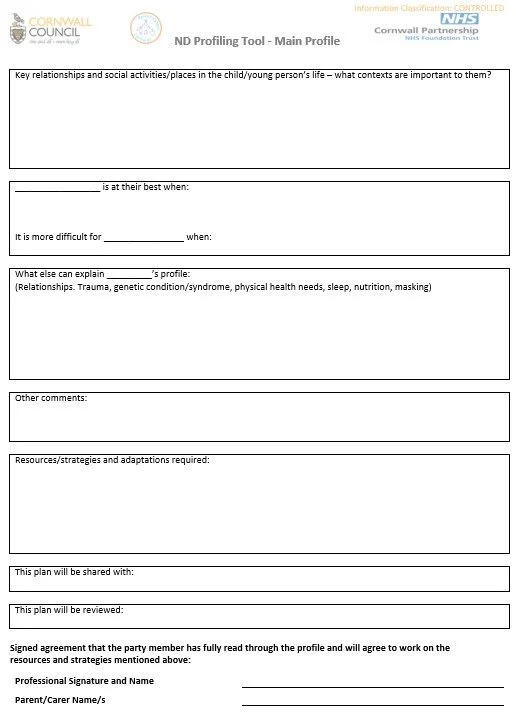
Everyone involved must work together to build the profile. This includes the child or young person, their parent or carer, and the lead professional or teacher. Working together leads to better outcomes and improved wellbeing. Everyone’s voice matters and must be respected.
Building the Main Profile
The main profiling tool has nine lines. Each line has a heading in a grey box on the left. These headings show the area being assessed.
Users mark a cross on each line to show where the child or young person falls on the spectrum. A cross closer to the left means lower ability. A cross closer to the right means higher ability.
Things to Check Before You Start
Before using the profiling tool, discuss the following areas. They may affect the child or young person’s profile as they often overlap with neurodivergent traits.


-
Masking happens when a neurodivergent person copies the behaviour of neurotypical people. They may do this to fit in, avoid stigma, or feel accepted.
-
Getting enough sleep helps children and young people stay healthy, learn well, and develop properly.
-
Neurodivergent people often experience food differently. They may be sensitive to how food looks, smells, tastes, or feels. Interoception (awareness of internal body signals) also plays a role. It helps people recognise hunger and fullness.
Other Areas to Discuss
In Wirral professionals suggest that you also discuss the following issues.
Childhood Experiences
Early life experiences shape physical and mental health, development, and behaviour. Two key areas to consider are attachment relationships and adverse childhood experiences (ACEs). See the Childhood Experiences section for more information.
Bladder and Bowel
Children with anxiety, sensory preferences, or rigid behaviours may hold in their poo or wee. This can reduce the brain’s signals for needing the toilet and increase the risk of bladder and bowel problems. See the Bladder and Bowel section for more information.
Vision and Hearing
Make sure the child or young person has had their vision and hearing checked. Schools usually screen for both in Year 1, but you can request a test at any time. See the Vision and Hearing section for more information.
How Often Should You Review the Profile?
You can review the profile as often as needed. A familiar adult can help review it each term to see if the child or young person responds well to support and interventions.
The neurodiversity profile shows progress over time and helps track improvements.