
Knowing Me User Guides
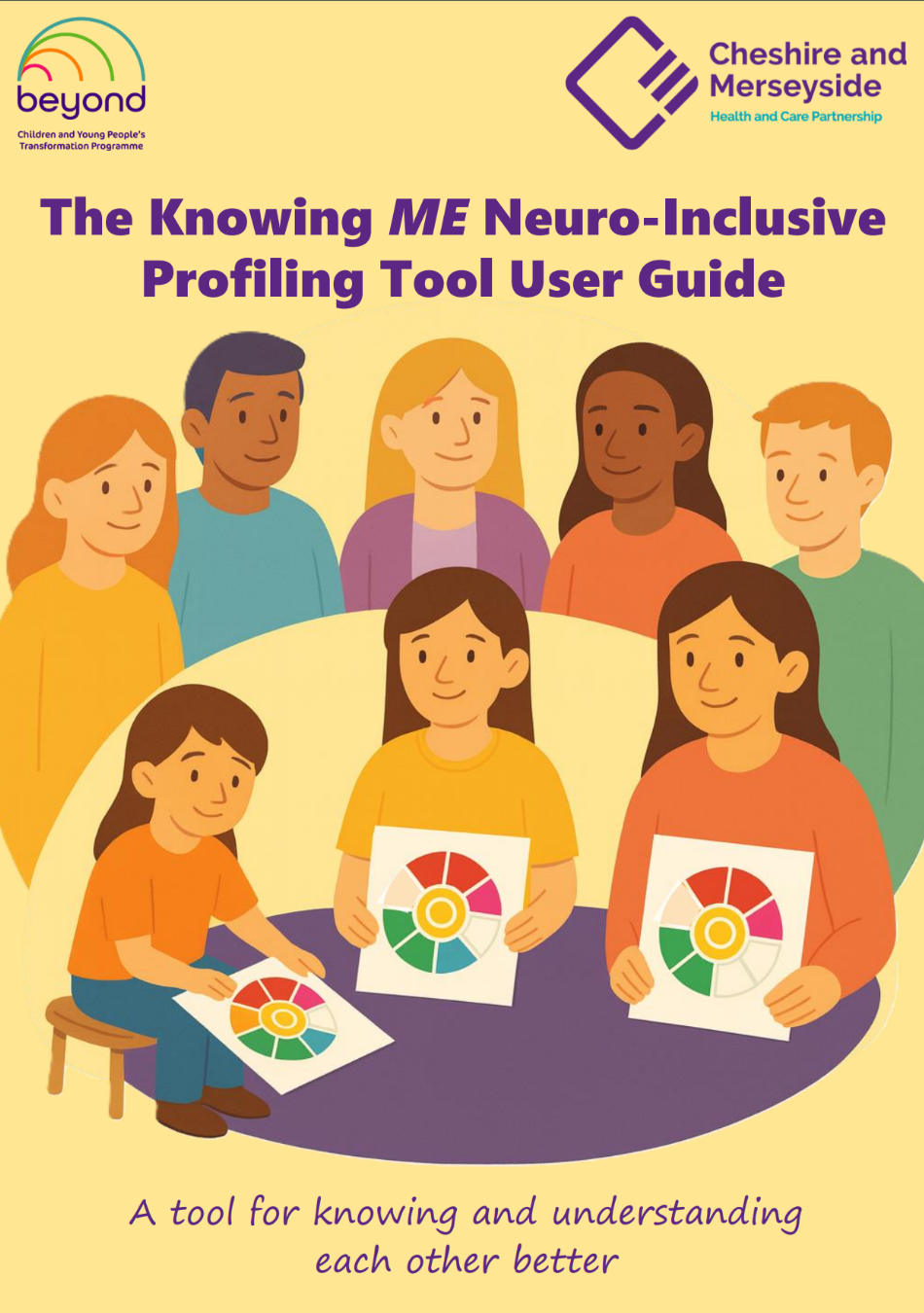
The Knowing Me Neuro-Inclusive Profiling Tool User Guide
Click on the image.
This will take you to the NHS site and an online version of the full user guide. The guide is for use by professionals who have been trained to use Knowing Me.
Wirral’s Digital Knowing Me
IKnowing Me is now available as a digital tool for Special Educational Needs Coordinators (SENCOs) in Wirral. This is the first step in rolling it out across Wirral.
In the future, more school staff and other professionals will be trained to use Knowing Me and complete profiles with children, young people and their families.
The digital profile is a little different from the version shown in the videos at the bottom of this page. However, the videos still give a good overview of how Knowing Me works and how it can help families and professionals work together. There are different videos for different ages of children and young people.
How to use the Knowing Me digital tool
The video shows professionals how to add information to the digital profile.
The tool can be used by:
SENCOs
teachers
support staff
other professionals who work with children and young people
The Knowing Me tool helps everyone understand a child's or young person's neurodiverse needs across the 10 key areas.
Using the tool helps professionals work together and provide the right support.
SENCOs in Wirral schools can create a Knowing Me profile for children and young people aged 5 to 18. They use Ordinarily Available Provision and the Graduated Approach to help plan the right support for students.
A SENCO may use Knowing Me if they feel it would help them better understand a child or young person’s neurodivergence and support needs.
Children and young people may need support for many different reasons. If a SENCO does not think neurodivergence is part of who the child or young person is, they will not complete a Knowing Me profile. Instead, they will continue to use the Graduated Approach to make sure the right support is in place.
Not having a Knowing Me profile does not mean a child or young person cannot get support.
If you are unsure, please speak to your school SENCO.
Only professionals can create a Knowing Me profile. Once the profile is complete, the professional can share a unique link so you can view or print it.
How can parents, carers and young people get ready to complete a Knowing Me profile?
The SENCO has suggested we complete Knowing Me. What happens next?
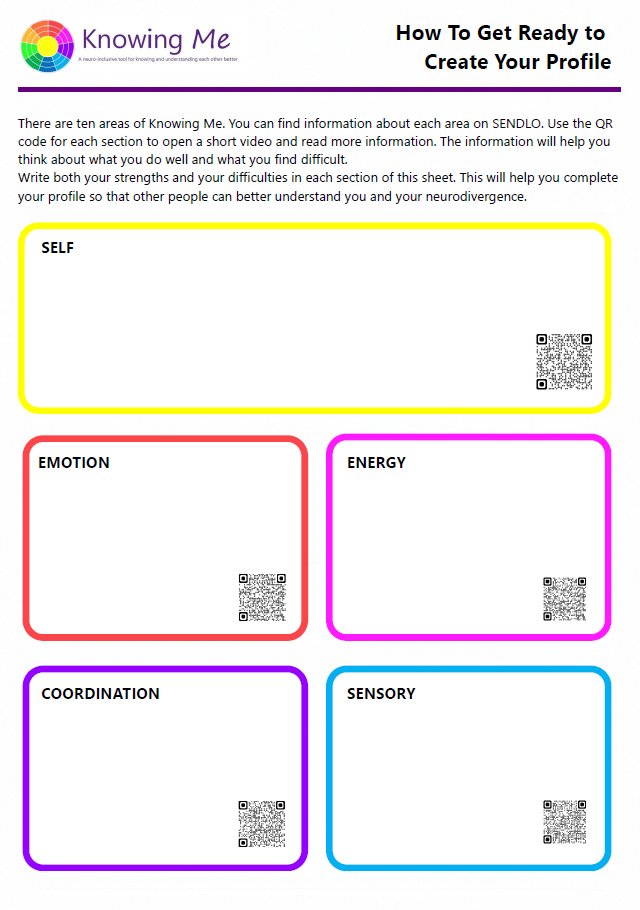
Your SENCO will give you a leaflet called “Knowing Me - How to Get Ready to Create Your Profile”. You can also download and print a copy by clicking the image.
The leaflet has ten sections, one for each area of Knowing Me. You can learn more about each area on SENDLO. Use the QR code in each section, or the links below, to open a webpage with a short video. The videos and information will help you think about your strengths and the things you find difficult.
Write your strengths and any difficulties in each section of the leaflet. Bring it with you when you meet the professional who is helping you complete your profile. It’s ok to not know and you can leave boxes empty.
This will help give other people a better understanding of you and your neurodivergence.
If this feels too hard you can write down the things that worry you and bring those to the meeting.
Can I get any advice or support?

ADDvanced Solutions offers information and support about neurodivergence and Knowing Me for parents and carers. They also run a weekly support group at Gautby Road Play, Youth and Community Centre. Details of the support they offer can be found below.
You can also use the link in the image to view the calendar for Wirral families. The calendar includes Knowing Me sessions for parents and carers, as well as other events and support available across Wirral.
You can also talk to the SENDLO Officer at a Drop In. They are held in Best Start in Life Family Hubs across Wirral.

User Guide Videos
You may find it easier to watch one of the user guide videos. Select the one that best describes you.