

Coordination
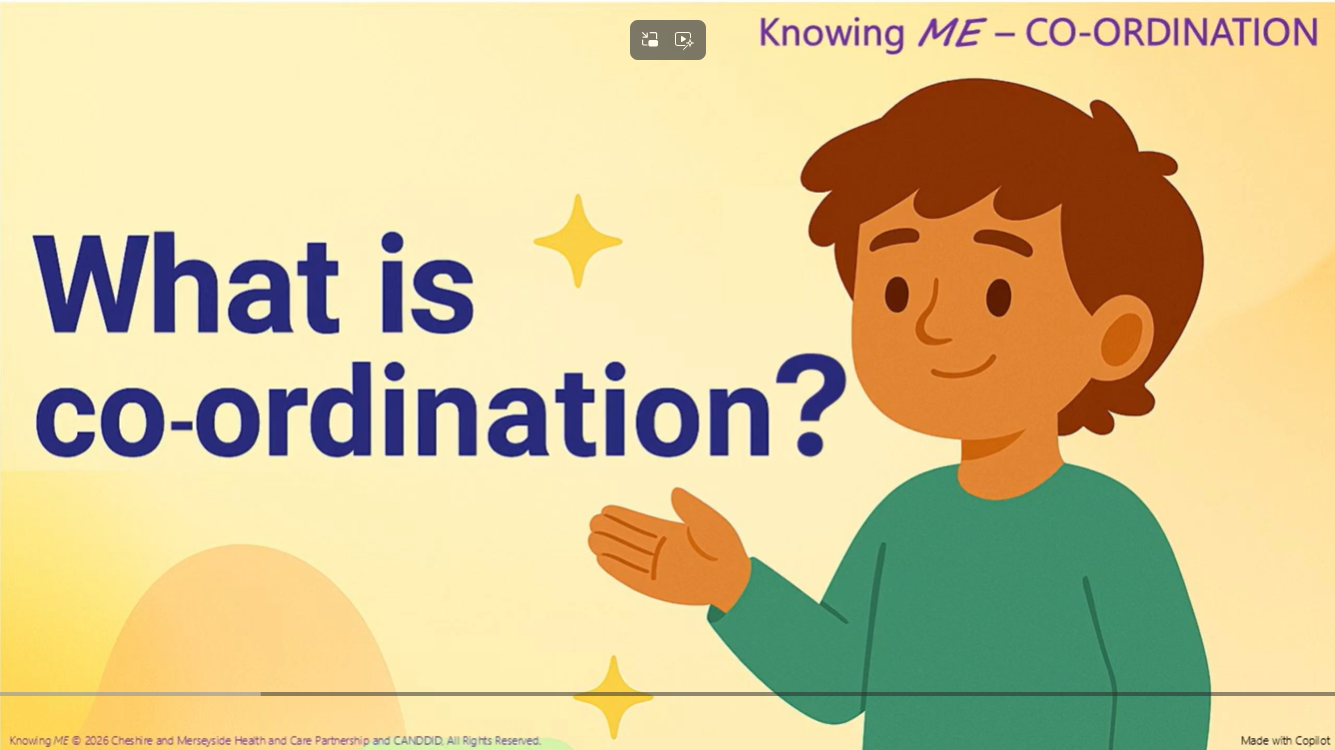
Coordination is how the brain and body work together to move.
The brain sends messages through the nervous system (the body’s message system) to the muscles. This helps with actions like walking, writing and playing. These actions often happen quickly and without thinking.
Sometimes the brain may find it hard to send the right message at the right time.
This can make movement slower or harder, even when the person knows what they want to do or say.
Impact on Neurodiverse Young People
For neurodivergent young people, the connection between the brain and body may work differently. This includes people with:
autism
Attention Deficit Hyperactivity Disorder (ADHD)
dyspraxia (a condition that affects movement and coordination)
Tourette syndrome
Each person is affected in different ways. The effects can include:
messages take longer to process or respond
movements happen in unexpected ways, such as tics or stimming (self-soothing actions like rocking or fidgeting)
tasks need more effort, creativity or different ways of doing things
Young people may experience:
Motor planning difficulties – finding it hard to plan and carry out movements
Sensory differences – being more or less sensitive to touch, sound or movement
Muscle tone and balance differences – affecting posture, movement and stamina
Unexpected movements – such as tics or stimming
These differences are not on purpose and are not bad behaviour. They are part of how a neurodivergent brain works.
Movement may be different, but it is still valid and meaningful.

Empowering Neurodivergent Young People
Your brain works in its own way.
Movement may feel different for you, and that is okay.
You may:
need more time to plan or complete movements
use tools such as fidget items or visual supports
find new ways to express yourself through movement
Your persistence (keeping going), adaptability (being able to adjust), and creativity are strengths.
You are not broken. You are learning your own way.
Tools to Help with Movement and Coordination
Here are some simple tools and ideas:
Visual schedules – show what will happen next and support movement tasks
Movement breaks – short activities to reset focus and energy
Sensory walks – calm walks that use the senses
Adaptive equipment – tools like therapy balls, balance boards or pencil grips
Fidget tools – small items to help focus and self-regulation (managing feelings and energy)
Digital apps – such as GoNoodle, Super Stretch Yoga or Choiceworks
How Adults Can Support Neurodivergent Movement
Parents, carers and educators can help by:
being patient and understanding
recognising that movement differences are neurological (linked to the brain), not behaviour choices
celebrating effort and creativity
supporting sensory needs with tools such as weighted blankets or fidget items
allowing self-expression, including stimming
avoiding pressure to move in a “normal” way
creating safe spaces for movement and exploration
Strategies to Help Coordination
As well as the strategies listed here you can visit Watch Me Do It on the link below. This is a video resource created by Manchester Metropolitan University.
All of the videos are filmed from the perspective of the person doing different things. They show people how to do everyday things they may find hard to do.
Buttoning a shirt, opening packets, chopping food, putting on shoes, and turning clothing the right way round. There are also videos for left handed and right handed people.

-
Occupational Therapy (OT) can help improve movement skills. If a young person needs lots of support in this area the school and family might need to refer them for an assessment. Your SENDCO will discuss this with you.
-
Activities such as:
swinging
climbing
playing with different textures
can help the body understand movement better.
-
Use:
simple instructions
step-by-step guidance
demonstrations
This can support planning movements.
-
Add movement to activities the young person likes.
For example:
dancing to favourite music
acting out stories
This can increase interest and engagement.
-
Short and regular breaks can:
improve focus
reduce frustration
What’s On to support families
Support in Wirral
-
My Happy Mind
My Happy Mind is a resource that can be used by schools in Wirral. There is support for parents and carers and children and young people. You can find more information on their website.
The service in schools is free.
Resources and Helpful Information
The National Autistic Society is a charity that helps autistic people and their families by providing information, advice, and support. Its motor skills guide explains that many autistic children can find movement, balance, coordination, and planning physical activities more difficult. The guide describes both gross motor skills, such as running and throwing, and fine motor skills, such as writing and using small objects. It shares practical ideas to build these skills, including swimming, trampolining, climbing, ball games, and other fun movement activities. These resources help parents, carers, and professionals understand motor skill differences and support children to develop confidence and independence
Dyspraxia/DCD Ireland is a charity that supports children, young people, and adults with dyspraxia (DCD) and helps others understand the condition. The website explains what dyspraxia is and how it can affect movement, coordination, learning, daily tasks, wellbeing, and employment. It offers useful resources such as guides for schools, workshops, information for families, and advice for adults with dyspraxia. The site also provides free resources, frequently asked questions, transition guides for moving to secondary school, and recommended books and learning materials. These resources help people with dyspraxia build skills, gain confidence, and get the support they need at school, work, and home.
Sensory Help Now is an organisation that provides expert advice and training to help parents support children with sensory differences. Its Progressing with Dressing course explains why some children find getting dressed difficult because clothes may feel itchy, tight, uncomfortable, or overwhelming. The course helps parents understand sensory processing and shows how sensory differences can affect dressing. It offers practical strategies to support children, including ways to reduce sensory discomfort and build confidence with dressing. These resources help families better understand their child’s needs and make everyday tasks like getting dressed easier and less stressful

The Brain Charity is a charity that helps people with neurological conditions and neurodiversity to live happier, healthier lives by providing support, advice, and activities. Its dyspraxia page explains how dyspraxia can affect movement, coordination, organisation, and everyday tasks, while making clear that it does not affect intelligence. The website provides information about the signs, causes, and challenges of dyspraxia in both children and adults. It also offers practical help, emotional support, counselling, social activities, and guidance for people living with neurological conditions. These resources help people with dyspraxia understand their condition, build confidence, and get the support they need.

Dyspraxia UK helps children, young people, and adults understand and manage dyspraxia by providing expert advice, information, and support. Its Reading Material page recommends helpful books about dyspraxia, neurodiversity, education, sensory differences, school, work, and everyday life. The resources are chosen to help families, teachers, and people with dyspraxia better understand the condition and its challenges. The site also shares links to useful organisations, specialists, and practical resources for learning new skills and building confidence. These resources help people with dyspraxia understand their strengths, overcome difficulties, and succeed at home, school, and work
Watch Me Do It is a free website created by researchers at Manchester Metropolitan University to help children with dyspraxia and other movement difficulties learn everyday skills. The site has a large video library showing tasks such as tying shoelaces, using cutlery, getting dressed, washing hands, and opening packets. The videos are filmed from a first-person view, making it easier for children to copy the movements they see. Children can watch the videos and practise the skills as many times as they need. These resources help children build confidence, improve coordination, and become more independent in daily life.